Finally sleep better.

A wearable headband being designed to read your brainwaves and time gentle sound to them.

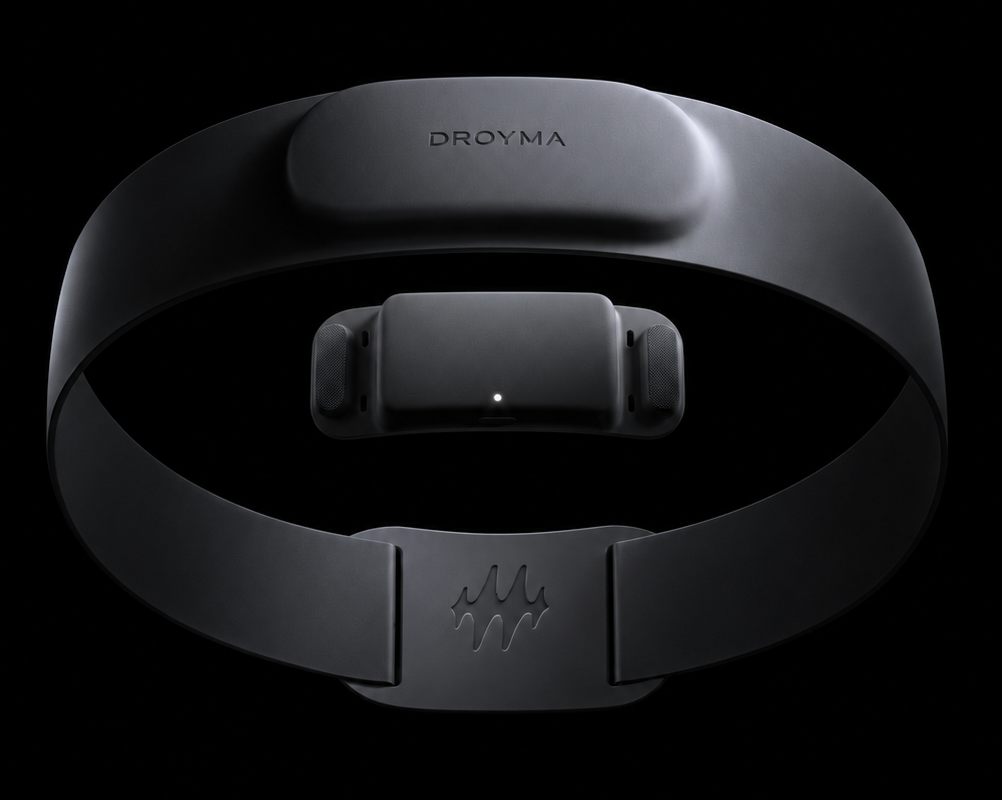
The Droyma band in black
Learn more

Wake up
recovered.

Go take on
your dreams.

Join the waitlist

The problem

Your sleep tracker tells you how badly you slept, but doesn't change it.
You take melatonin, and you're still tired the next morning.

Meet Droyma.

A new kind of wearable designed to improve your sleep and cognitive performance.

A closer look Tap a point to explore

The Droyma band in black: front module, inner view and headband
01 / 03

Front module

Lies almost flat against the forehead, with the DROYMA mark.

How Droyma works

Settle into the night

Fall asleep
faster.

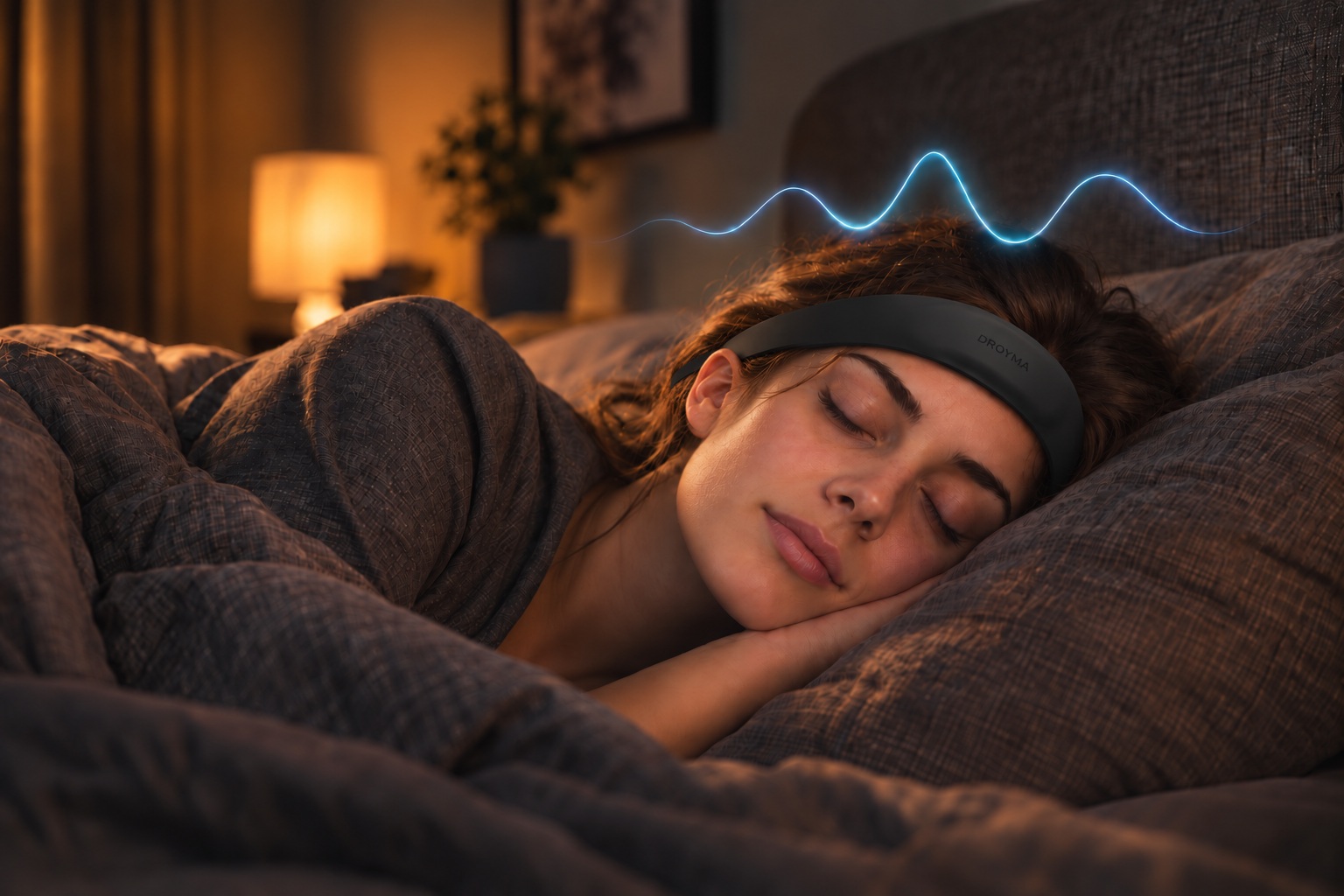
Designed to time gentle sound to your brainwaves, so you can ease into sleep.

Explore the approach

↗

Your body is tired.
Your mind is still going.

Illustration of a person drifting off, with a soft brainwave above their head

A more settled night

Fewer
interruptions.

Designed to time gentle sound to your slow waves, to support a steadier night.

See how it follows your night
↗

In step with your brain.
Through the night.

01EEG reads your rhythm
02Gentle sound follows

Designed to support a steadier night.

The morning that matters

Wake up
rested.

Designed to support restorative sleep, so you feel it by morning.

Get to know Droyma
↗

You slept.
You still feel exhausted.

A woman stretching outdoors in the morning

What it's for

Built for recovery and cognitive performance.

An athlete running outdoors
For athletes

Recover well.
Play your best.

Read about the approach ↗
The Golden Gate Bridge in San Francisco on a clear day
For founders

Think clearly.
Lead with confidence.

See how Droyma works ↗

Droyma Diaries

The research
behind the rhythm.

Plain-language reads on sleep, brainwaves and the science of sound.

Explore the research
← Back to Droyma

Droyma Diaries · Sleep science

Why timing matters when sound meets sleep.

Sound is more than background noise. Researchers have studied what happens when quiet sound arrives in step with sleeping brainwaves.

Start with the rhythm.

During deep sleep, the brain produces slow waves. Closed-loop auditory stimulation means measuring those rhythms and using that information to time brief sounds.

What was studied?

In a small 2013 laboratory study, Ngo and colleagues tested sounds timed to slow-wave activity during sleep. The study reported stronger slow oscillations and improved overnight word-pair memory compared with a control condition.

The timing is the point: this is not the same as playing continuous music or white noise through the night.

What does that mean for Droyma?

Droyma is being designed to read your brainwaves and time gentle sound to them. Published laboratory work helps explain the approach. It is not a measurement of Droyma's own performance.
Read the original study.

Ngo et al. · Auditory closed-loop stimulation of the sleep slow oscillation enhances memory · Neuron, 2013 ↗

Research note · Draft for review

Sleep isn't time off.

It's when your brain does its most important work.

Why sleep matters

Without quality sleep, it’s harder to stay focused.

Bonnet & Arand, Sleep Medicine Reviews, 2003

Memory

Deep sleep helps your brain move short‑term memories into long-term memory.

Diekelmann & Born, Nature Reviews Neuroscience, 2010

FAQ

Questions, answered.

Is Droyma a sleep tracker?

No. A tracker watches your night and hands you a score in the morning. Droyma is designed to read your brainwaves and respond to them, timing gentle sound to the moments your brain can use it. You wake up to the result, not a report.

Is there anything in my ears?

No. The design uses bone conduction, so nothing sits in or over your ears: a soft fabric band, a front module that lies almost flat, and a fit that adjusts at the back.

Is it safe?

Droyma uses gentle sound, the same kind of stimulation studied in sleep labs for years. It's a wellness wearable, not a medical device. It doesn't diagnose, treat, cure or prevent any disease.

What's the science behind it?

Sound timed to deep-sleep brainwaves has been studied in published research for over a decade; in one lab study it strengthened deep-sleep rhythms and improved overnight memory. That is published science, not yet a proven Droyma result.

When can I get one?

Join the waitlist. We'll open the first batch to the list in order. Joining is free, and there's no payment until your band ships.

Who's building Droyma?

Daniel Opata and Emerson Yu, in Toronto. It is early on purpose, and the waitlist follows each step as it happens.

Recover like it matters.

Show up at your best.

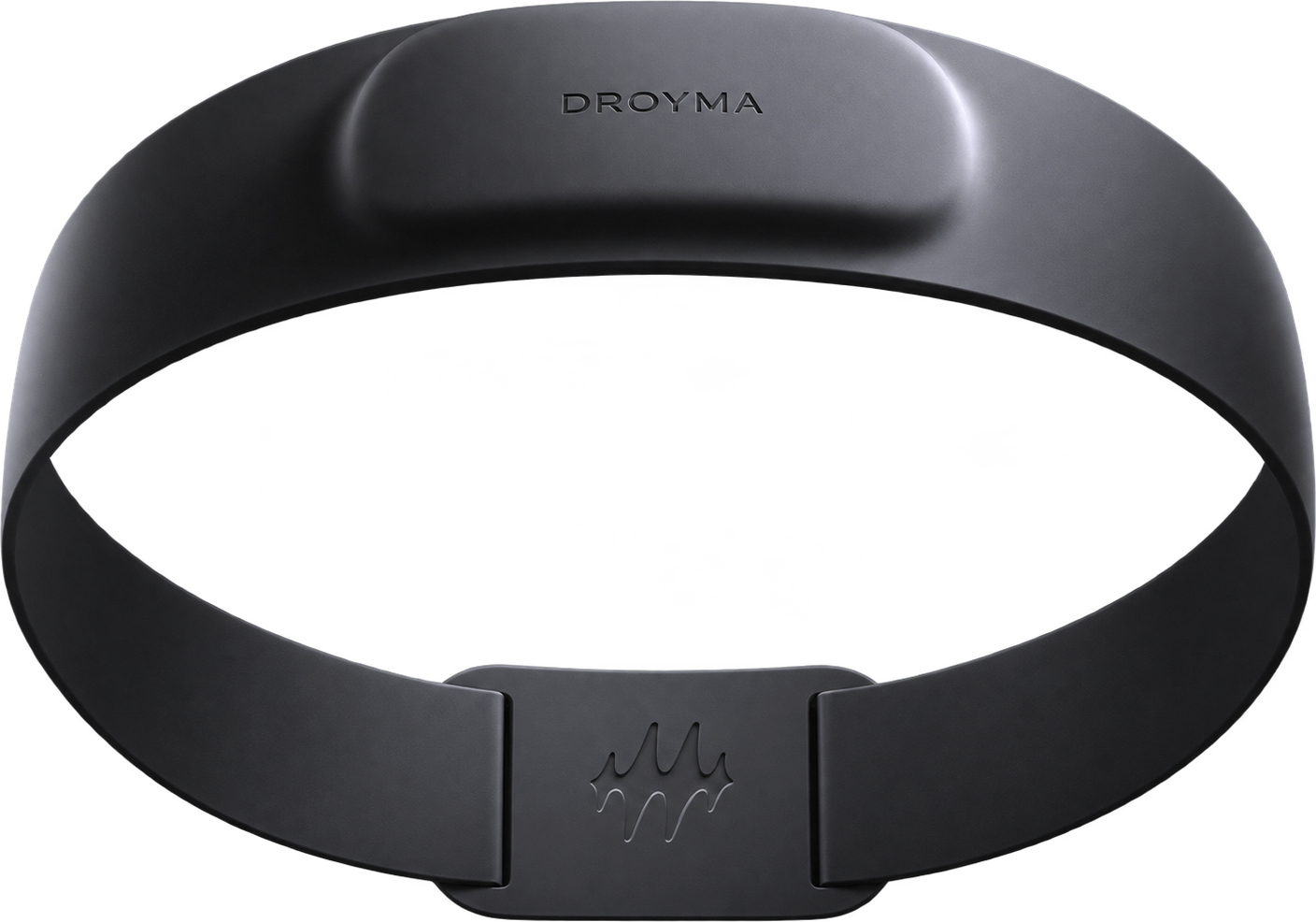
The Droyma band in black

Email only. No payment today.

About Droyma

The people behind
better mornings.

Building a headband that listens to your brain while you sleep. Designed and built in Toronto.

The people

A small team.
A better night in mind.

We're working on a simple idea: soft sounds, timed to your own brainwaves, while you sleep.

Daniel Opata
Emerson Yu
Aidan

Photo placeholders for this draft.

What we're building

Less guessing.
More listening.

Your sleep changes through the night. The idea behind Droyma is to listen as it changes, then choose when to play a gentle sound. Not a track that plays the same way for everyone.

The waitlist is where we'll share what comes next.

See how Droyma is being designed ↗

The Droyma approach

Deeper sleep.
Better days.

You made time for sleep.
You still woke up tired.

Droyma is a headband being designed to do more than tell you how the night went. It reads your brainwaves and times gentle sound to them, with the aim of helping you sleep more deeply and wake up rested.
Get to know the band

The wearable

Not just a picture
of your night.

Knowing you slept badly doesn't change how you feel. Droyma's approach is to listen to what your brain is doing and respond while you sleep.

Droyma headband showing its front module and inner view

The Droyma headband · Design concept

Explore the design

The problem you actually feel

It isn't about getting
a better sleep score.

01 / Falling asleep

You're tired.
Your mind isn't.

You've set aside the time. You've put your phone away. You're still lying there, thinking about tomorrow.

A report in the morning can't help in that moment. Droyma is being designed to use your brainwaves to guide gentle sound as you settle toward sleep. The aim is to help you fall asleep faster, rather than only measure how long it took.

02 / Staying asleep

In step with your brain.
Through the night.

Falling asleep wasn't the whole problem. It's the broken night, and knowing you need to be up in a few hours.

The approach follows your sleep as it changes. Sound pauses when you stir and is intended to resume when you're back in deep sleep. The goal is a more settled night with fewer interruptions.

03 / The next morning

You slept.
You don't feel rested.

You don't need another number to explain why you're dragging yourself through the day.

Droyma's goal is restorative sleep: a night that leaves you ready for what matters in the morning. Deeper sleep is the approach. Feeling rested is the point.

These are the outcomes Droyma is being designed to support, not results from a completed Droyma clinical trial.

What happens while you sleep

Listen. Find the moment.
Respond.

Not a playlist on repeat. The sound is meant to follow your brain, not ask your brain to follow the sound.

01

Read the wave.

In deep sleep, your brain produces slow, repeating waves. Sensors on your forehead listen to that activity through the night.

02

Choose the moment.

The system looks for the peak of a slow wave. The timing matters: the idea is to work with the rhythm already there.

03

Play a soft sound.

A quiet sound is timed to that wave. Then the system keeps listening, so the next sound is chosen from what your brain is doing next.

Your waves.
Not an average night.

Your sleep changes during the night. The design follows those changes, instead of using the same timing from bedtime to morning.

From the first night, the intention is for the sound to follow your own brainwaves. Across nights, Droyma is being designed to learn your patterns and adjust to you.

Why this approach

The science
comes first.

Researchers have studied sound timed to deep-sleep brainwaves for over a decade. In a 2013 sleep-lab study, sounds timed to slow-wave activity strengthened those rhythms and improved performance on a memory test the next morning.

That supports the idea behind the approach. It does not prove that the Droyma headband will deliver the same results. Hardware, real-world performance and individual outcomes still need testing.

Read the study: Ngo et al., Neuron, 2013 ↗Read our plain-English explanation ↗

Before the first night

Know what you're
signing up for.

Is Droyma available now?

Not yet. Join the waitlist to follow progress and hear when the first batch opens. Joining is free. There is no payment today.

Is this a medical device?

No. Droyma is being developed as a wellness wearable. It does not diagnose, treat, cure or prevent a disease. If you have persistent sleep problems, speak with a qualified healthcare professional.

What are the intended specifications?

Forehead EEG for brainwaves, optical PPG for pulse and blood oxygen, bone-conduction sound and a target of 12 hours of battery life. These are design intentions, not final tested specifications.

Will I need anything in my ears?

The intended bone-conduction design uses gentle vibration to carry sound, rather than an earbud in the ear or headphones over it.

What would I see in the app?

The app concept brings together setup before bed and a view of your night in the morning. Sample screens and sample nights on this site are illustrations, not Droyma trial results.